

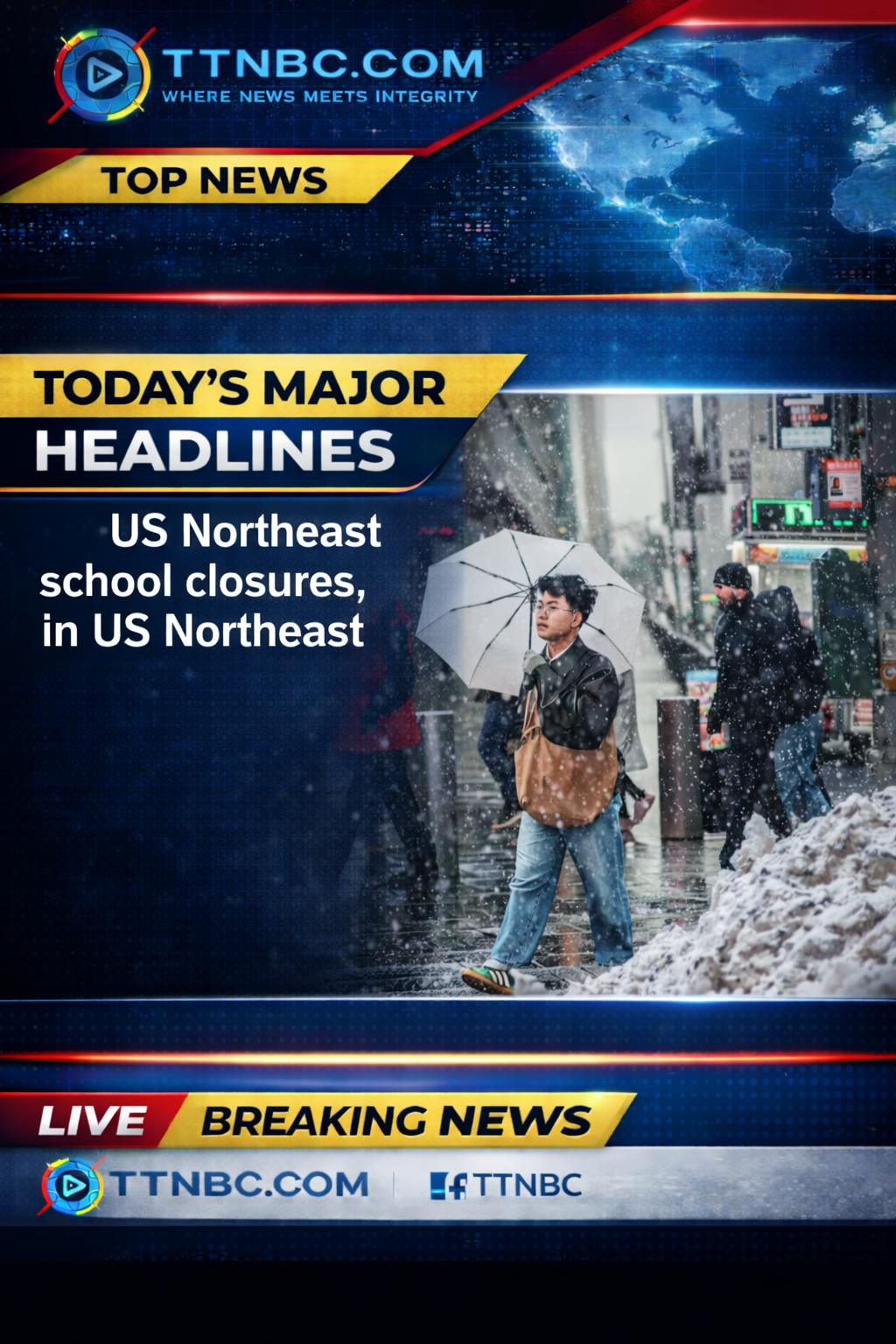
A powerful winter storm sweeping across the US Northeast has forced widespread school closures, travel disruptions, and emergency declarations, prompting authorities to urge residents to stay indoors as dangerous conditions intensify.
Children across several northeastern states remained home on Monday as heavy snowfall, powerful winds, and freezing temperatures crippled daily life. Local governments activated emergency protocols while transport networks struggled to cope with rapidly deteriorating conditions.
From Washington, D.C., to New England, the storm caused thousands of flight cancellations, delayed public transportation, and treacherous road conditions. The US Postal Service also warned that mail and package deliveries could experience major delays due to the extreme weather.
New York Declares Emergency
New York City, the largest school district in the nation, shut down all public schools for a traditional snow day, canceling in-person classes, remote learning, and after-school programs.
Mayor Zohran Mamdani declared a state of emergency, ordering non-essential vehicles off city roads from Sunday night through Monday afternoon. The move aimed to allow snowplows and emergency crews to clear streets more efficiently as snowfall intensified.
“I’m urging every New Yorker to stay home and avoid unnecessary travel,” Mamdani said, as the city experienced its first blizzard warning since 2017.
Municipal offices closed for in-person services, and non-essential government staff were advised to work remotely.
Heavy Snowfall and High Winds Expected
According to the Department of Homeland Security (DHS), some areas of the Northeast could receive up to two feet of snow, while wind gusts may reach 70 miles per hour, increasing the risk of fallen trees, structural damage, and widespread power outages.
New York Governor Kathy Hochul activated 100 National Guard members to assist communities in Long Island, New York City, and the Lower Hudson Valley — regions expected to suffer the worst impacts from snow accumulation and coastal winds.
The storm also forced the closure of the United Nations headquarters complex in Manhattan for safety reasons.
Despite ongoing federal funding challenges, the Federal Emergency Management Agency (FEMA) confirmed that its emergency response operations remain fully active. Officials emphasized that life safety and disaster relief efforts continue without interruption.
Last week, Reuters reported that President Donald Trump had ordered FEMA to temporarily halt the deployment of hundreds of disaster-relief workers while DHS faced funding constraints.
Regional States Issue Emergency Orders
Massachusetts Governor Maura Healey declared a statewide emergency and instructed government employees to remain home.
Connecticut imposed restrictions on commercial vehicles traveling on major highways, allowing only emergency and essential supply deliveries.
Meanwhile, New Jersey Governor Mikie Sherrill declared a statewide emergency effective Sunday afternoon, urging residents to take the storm seriously. “This storm poses serious safety risks, and everyone should remain cautious,” she told CNN.
Air Travel Paralyzed
Air travel was among the hardest-hit sectors. Flight-tracking service FlightAware reported more than 5,000 flight cancellations for Monday alone. Aviation analytics firm Cirium revealed that over 25,000 flights were scheduled nationwide, with disruptions expected to extend into Tuesday, particularly at major airports in New York, Boston, and Philadelphia.
Passengers faced widespread delays, airport congestion, and last-minute cancellations as airlines attempted to adjust schedules amid the deteriorating weather.
Public Safety Urged
Emergency officials continue to advise residents to stay indoors, avoid unnecessary travel, and prepare for possible power outages. Utility companies and emergency crews remain on high alert as snowfall and winds intensify.
Meteorologists warn that the storm could continue impacting the region for the next 24 to 48 hours, making public cooperation critical in ensuring safety.