

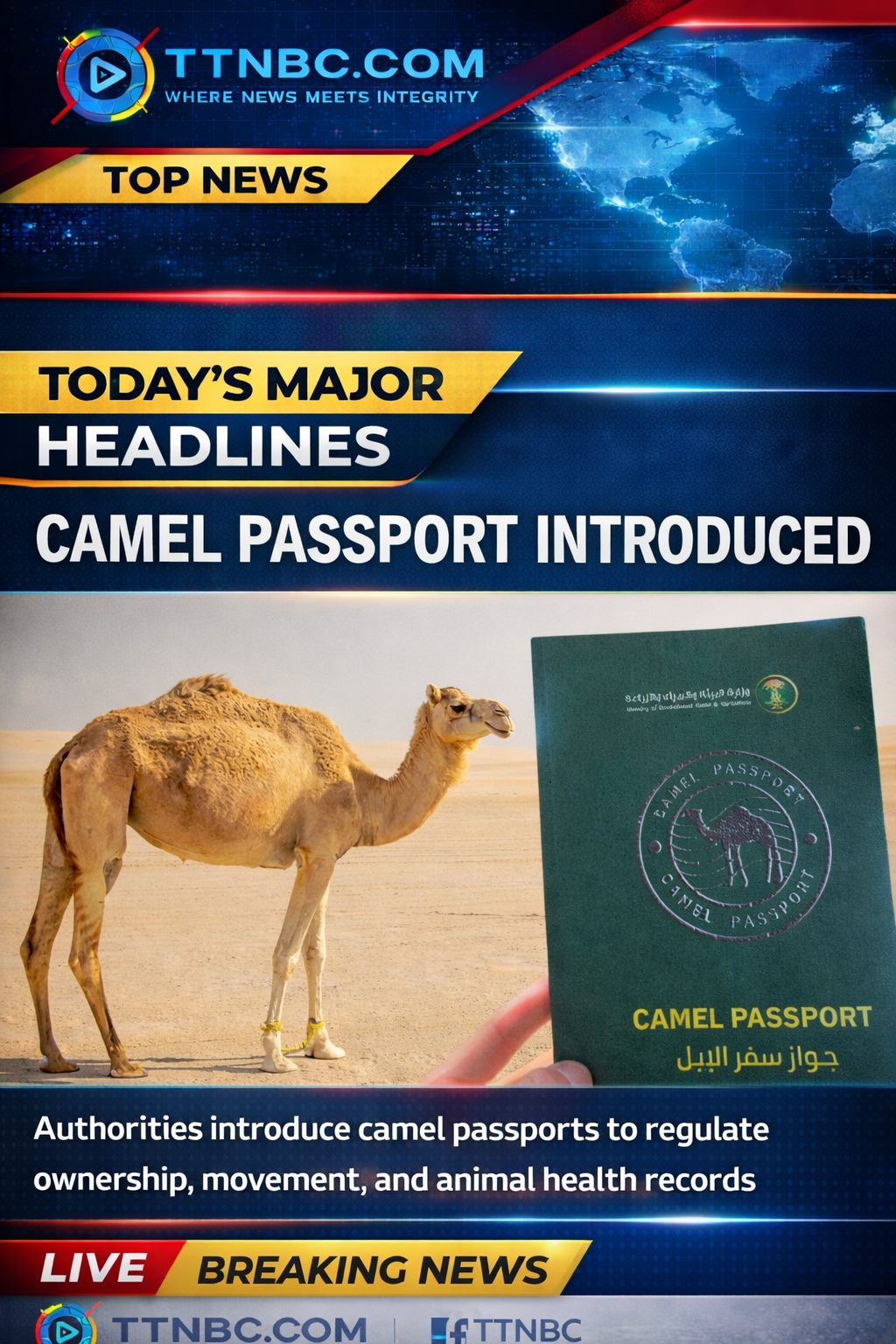
Saudi Arabia to Issue Passports for Camels — Major New Initiative
Saudi Arabia has officially announced that it will begin issuing passports for millions of camels within the Kingdom, a move designed to modernize and regulate one of the country’s most culturally and economically significant animal sectors. This innovative project aims to improve ownership tracking, regulate trade, and enhance the productivity and efficiency of the camel industry across the country.
Why Saudi Arabia Is Issuing Camel Passports
The Ministry of Environment, Water and Agriculture (MEWA) revealed that the new passport system will serve as an official identification document for camels, linking each animal to detailed health, ownership, and regulatory records. The initiative supports broader efforts to digitize livestock management and enhance transparency in the sector.
The project is part of Saudi Arabia’s ongoing effort under national agricultural development programs to better organize and regulate the camel sector, one of the country’s oldest and most cherished industries. Camels have deep historical roots in the Arabian Peninsula, where they have served as transportation, trade assets, and symbols of wealth and prestige for centuries.
How the Passport System Will Work
According to official government statements, each camel passport will contain:
- A unique passport number and microchip ID
- The camel’s name, date of birth, breed, sex, and color
- The animal’s place of birth and issuing authority
- Photographs of the camel (from multiple angles)
- A complete vaccination and health record
- Verified ownership details and regulatory data
By gathering this data in a centralized and reliable database, authorities will be able to monitor livestock populations, identify health and vaccination status, and ensure better veterinary care. It will also help prevent diseases from spreading and allow for quicker responses to animal health crises.
Modernizing Trade and Protecting Owners’ Rights
The camel passport will also serve as a legal document that strengthens commercial trust in the camel market. By standardizing documentation for sales, transport, and ownership transfers, the initiative is expected to:
- Regulate sales and trade activities more efficiently
- Ensure accurate proof of ownership for breeders and traders
- Protect owners’ rights in disputes
- Enhance the market value of camels in auctions and competitive events
Before this initiative, the camel trade relied largely on informal records, making it difficult to verify ownership or animal history. The passport system is expected to curb fraud, strengthen regulatory oversight, and streamline industry practices.
Cultural and Economic Significance
Camels have historically been central to life in Saudi Arabia and the broader Arabian Peninsula. In addition to transportation, they play a key role in traditional festivals, such as the King Abdulaziz Camel Festival, where breeders showcase prized animals and compete for top honors. These events draw significant attention and can see camels sold for hundreds of thousands of dollars.
In recent years, the camel industry has grown into a lucrative sector, particularly in breeding, buying, and trading. With an estimated 2.2 million camels currently in Saudi Arabia based on the government’s 2024 figures, the new passport system is expected to provide a foundation for long-term sector development.
Aligning with Saudi Vision 2030
Officials have noted that the project aligns with Saudi Vision 2030, the Kingdom’s ambitious economic and social reform plan. By digitizing livestock records and integrating modern regulatory tools, the program seeks to elevate the camel industry and support sustainable growth in agricultural sectors.
The camel passport project is also part of a broader movement to future‑proof Saudi Arabia’s livestock governance, encouraging innovation while preserving cultural heritage. The digital system offers a template that could one day serve as a model for other livestock industries in the region.
Challenges and Expectations
While the initiative is widely praised, some industry observers say its success will depend on effective implementation and adoption at the grassroots level. Breeders and market participants must adapt to new documentation requirements and digital platforms for managing animal records — a process that could take time.
However, experts believe that the long‑term benefits — including improved animal health monitoring, transparent trade practices, and stronger legal protection for owners — will outweigh short‑term adjustments. The camel passport is expected to become the industry standard in the Kingdom, and potentially inspire similar systems elsewhere.