

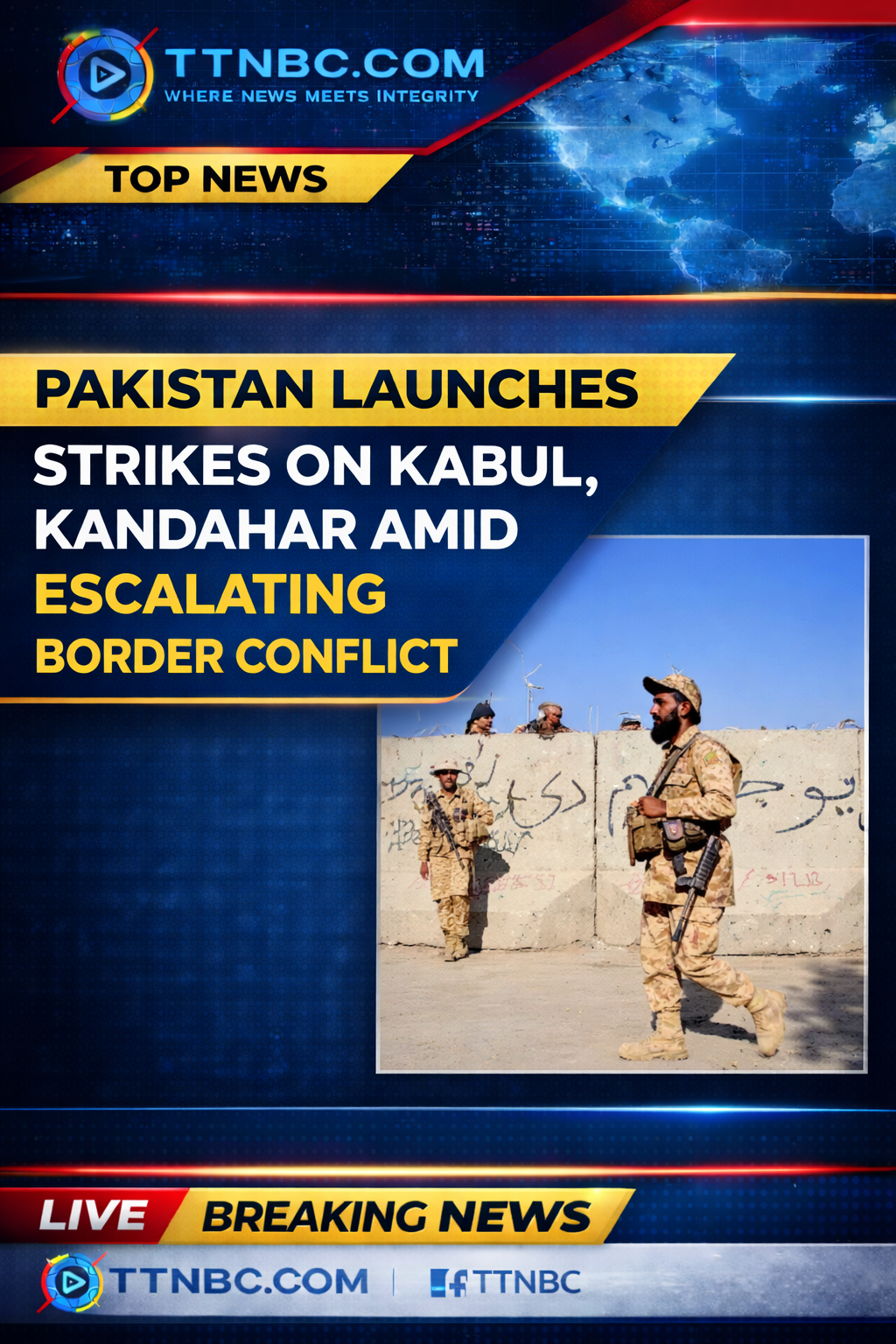
Tensions between Pakistan and Afghanistan sharply escalated early Friday after Pakistani forces launched strikes on the Afghan cities of Kabul and Kandahar, following renewed cross-border attacks. According to Pakistani government officials, the operation was a direct response to what Islamabad described as “unprovoked Afghan aggression” along the shared border.
Residents in Kabul reported hearing loud explosions in several areas of the city, while similar blasts were also reported in Kandahar. International news agencies confirmed widespread panic among civilians as emergency sirens and heavy security movements followed the strikes.
The Afghan Taliban, through statements posted on social media platform X, claimed they launched retaliatory attacks on Pakistani military positions along the border. However, the post was later deleted. Taliban officials stated that their forces conducted a “large-scale retaliatory operation” after alleged Pakistani strikes earlier in the week that reportedly killed at least 18 civilians, including women and children.
Pakistan, on the other hand, rejected these claims and said its strikes were carefully targeted at militant hideouts and terrorist camps near the border region. Islamabad blamed militant groups operating from Afghan territory for recent deadly suicide bombings and attacks inside Pakistan.
According to Pakistan’s Information Minister Attaullah Tarar, two Pakistani soldiers were killed and three others injured after Afghan forces opened fire late Thursday night. He described the attack as “unprovoked” and said Pakistan responded immediately to defend its territory.
Taliban military spokesperson Mawlawi Wahidullah Mohammadi stated that their forces launched the counter-operation around 8:00 PM local time, claiming significant damage to Pakistani military installations. Another Taliban spokesperson, Zabihullah Mujahid, alleged that several Pakistani soldiers were killed and that multiple military posts were captured. These claims were strongly denied by Pakistan’s government.
Prime Minister Shehbaz Sharif’s spokesperson, Mosharraf Zaidi, dismissed Taliban statements as false and misleading. He emphasized that Pakistan’s security forces had effectively neutralized the threat and inflicted heavy losses on the Afghan side. He further warned that any aggression would be met with a swift and decisive response.
The Pakistani Ministry of Information and Broadcasting said in an official statement that early reports confirmed multiple Afghan military posts had been destroyed, along with significant equipment losses. The statement added that Pakistan remains fully committed to protecting its territorial integrity and the safety of its citizens.
Along the border regions, especially near Torkham crossing in Khyber Pakhtunkhwa, residents described hearing intense gunfire and shelling. Authorities asked civilians to evacuate vulnerable areas as a safety precaution. The Torkham border crossing was temporarily closed, and the repatriation of Afghan refugees was suspended due to security concerns.
Afghan authorities claimed that civilian homes and a religious school were among the targets of Pakistani strikes, resulting in casualties. Pakistan strongly denied deliberately targeting civilians and maintained that only militant hideouts were struck.
The latest confrontation comes despite a ceasefire agreement reached between both nations in October after deadly clashes. However, the truce has remained fragile, with frequent accusations and sporadic fighting continuing along the 1,600-mile mountainous border.
Analysts warn that the renewed escalation could destabilize the region further, worsen humanitarian conditions, and strain already tense diplomatic relations. Calls are growing from international observers urging both sides to exercise restraint and pursue dialogue to prevent a wider conflict.


