

Pakistan Says 70 Militants Killed in Afghan Border Airstrikes as Kabul Rejects Claims
Pakistan has claimed that at least 70 militants were killed during a series of air raids along its border with Afghanistan, escalating tensions between the two neighboring countries. However, Afghan authorities have firmly denied the claims, calling the strikes a violation of their sovereignty.
Pakistan’s Claim of Major Counterterrorism Success
A senior government official in Pakistan stated that the military carried out targeted airstrikes early Sunday against what it described as militant hideouts near the Afghan border.
Talal Chaudhry, Pakistan’s Deputy Interior Minister, said in an interview with Geo News that at least 70 fighters were killed in the operation. Meanwhile, Pakistan’s state media reported that the death toll had risen to 80, although no independent verification or official confirmation was provided.
According to officials, the strikes targeted camps allegedly linked to the Tehreek-e-Taliban Pakistan (TTP), a militant organization accused of carrying out several recent attacks inside Pakistan. Among these incidents was a deadly suicide bombing at a Shia mosque in the capital city of Islamabad.
Information Minister Attaullah Tarar stated on social media platform X that the military conducted “intelligence-based, selective operations” against seven camps associated with the TTP and affiliated groups. The government emphasized that the action was taken to safeguard national security and protect Pakistani citizens from terrorism threats.
President Asif Ali Zardari defended the air raids, describing them as part of Pakistan’s inherent right to self-defense. He said repeated warnings had been issued to Afghan authorities to prevent armed groups from using Afghan soil to launch attacks against Pakistan.
Fragile Ceasefire Under Threat
The latest strikes come at a sensitive time, as both countries had been attempting to maintain a fragile ceasefire negotiated after deadly clashes in October last year. Those clashes resulted in the deaths of soldiers, civilians, and suspected fighters on both sides.
Pakistan has repeatedly urged the Taliban-led government in Afghanistan to take decisive action against militant groups allegedly operating from its territory. Islamabad claims Kabul has failed to take “substantive action” despite multiple requests.
Afghanistan Rejects Allegations
Afghan authorities swiftly rejected Pakistan’s accusations. The Afghan Ministry of Defence stated that the air raids struck “various civilian areas” in the eastern provinces of Nangarhar and Paktika. According to the statement, a religious school and several homes were damaged in the bombardment.
Taliban government spokesperson Zabihullah Mujahid condemned the strikes, claiming civilians were targeted and homes destroyed. He described the operation as a criminal act and a clear violation of Afghanistan’s airspace and sovereignty.
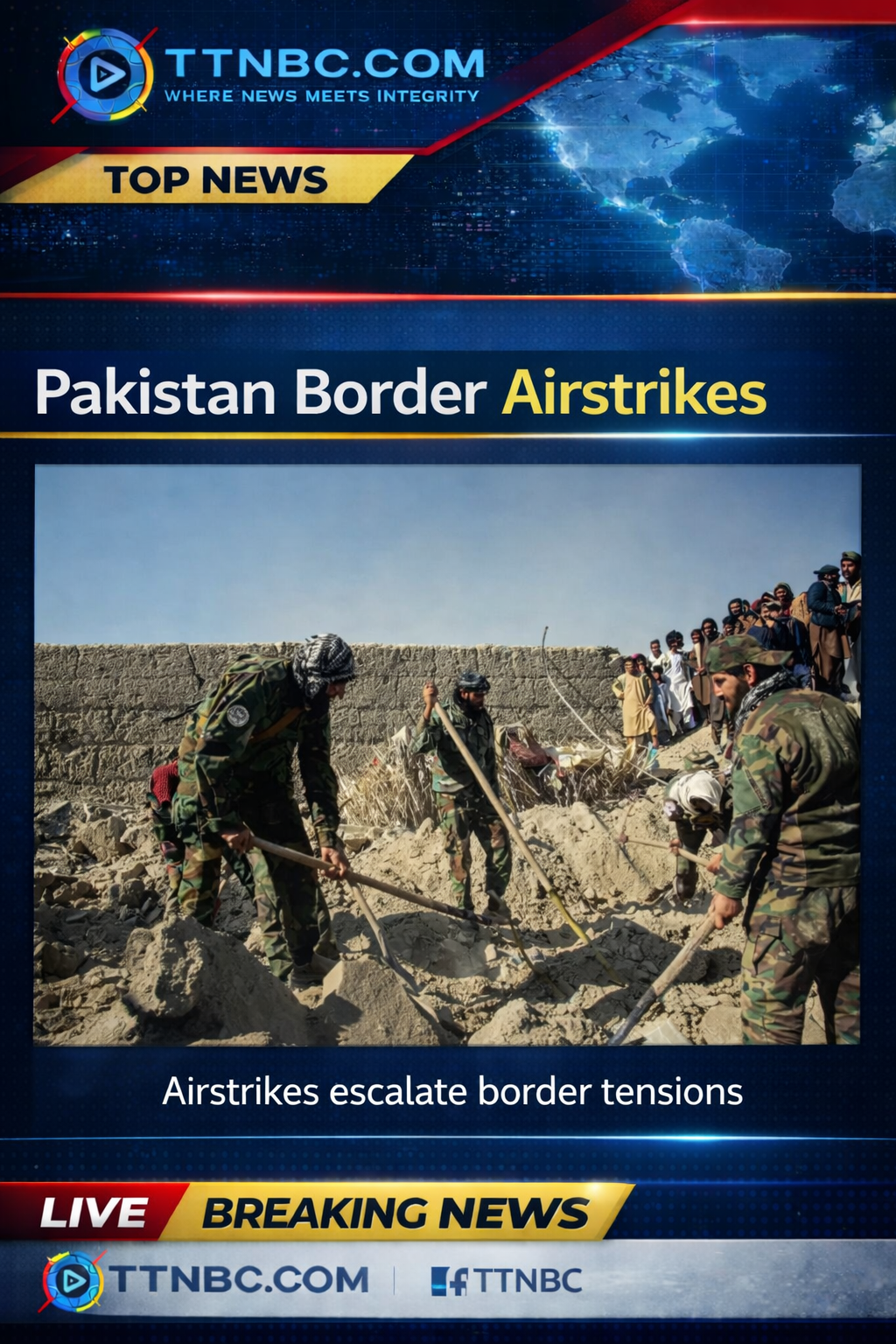
Local residents in the remote Bihsud district of Nangarhar reportedly joined rescue efforts, searching through debris with shovels and machinery to recover victims from under the rubble. The reports highlighted the humanitarian impact of the cross-border conflict.
Rising Regional Tensions
The cross-border airstrikes have further strained relations between Pakistan and Afghanistan, two nations already grappling with security and political instability. Analysts warn that continued escalation could destabilize the broader South Asian region.
Pakistan maintains that its actions are solely aimed at counterterrorism efforts and ensuring domestic security. Afghan officials, however, argue that such military operations undermine diplomatic efforts and risk harming civilians.
With both sides presenting conflicting narratives, the situation remains tense. International observers are closely monitoring developments, urging restraint and dialogue to prevent further violence.