

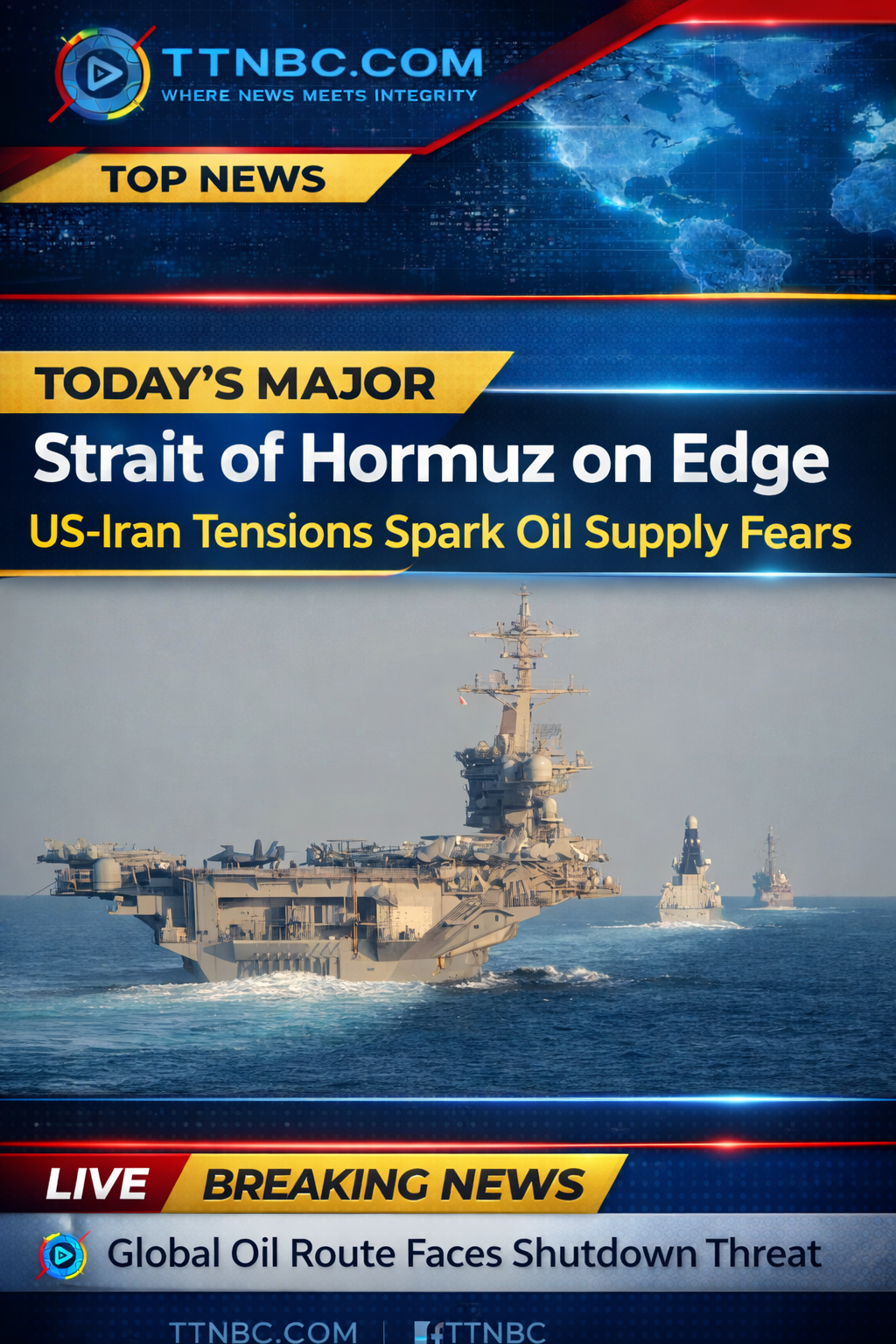
The Strait of Hormuz, one of the world’s most vital maritime passages, has once again come into sharp focus as tensions escalate between the United States and Iran. This narrow waterway plays a crucial role in global energy supply, carrying nearly 20% of the world’s oil and liquefied natural gas shipments.
Located between Iran and Oman, the strait connects the Persian Gulf to the Arabian Sea and Indian Ocean, serving as a critical link for oil exports from major producers including Saudi Arabia, the UAE, Iraq, Kuwait, and Qatar.
Iran has frequently threatened to block the Strait of Hormuz during geopolitical crises, viewing it as a powerful bargaining tool. In late January, a senior Iranian naval commander warned of its potential closure if military action were taken against Tehran. Despite these threats, Iran has never fully shut the strait, although it has temporarily restricted access during military exercises.
According to the US Energy Information Administration (EIA), about 20 million barrels of oil pass through the strait daily, with over 80% of shipments heading toward Asian markets, particularly China, which purchases the majority of Iran’s oil exports.
The region remains heavily militarized, hosting the US Fifth Fleet in Bahrain and the largest US military base in the Middle East located in Qatar. The presence of foreign naval forces has frequently led to maritime incidents, ship seizures, drone confrontations, and tanker attacks, especially since the collapse of the 2015 nuclear deal.
Recent confrontations, including the seizure of cargo vessels and close encounters between Iranian boats and US tankers, have intensified fears of conflict. Analysts warn that any disruption in the Strait of Hormuz could trigger massive oil price surges and global economic instability.