
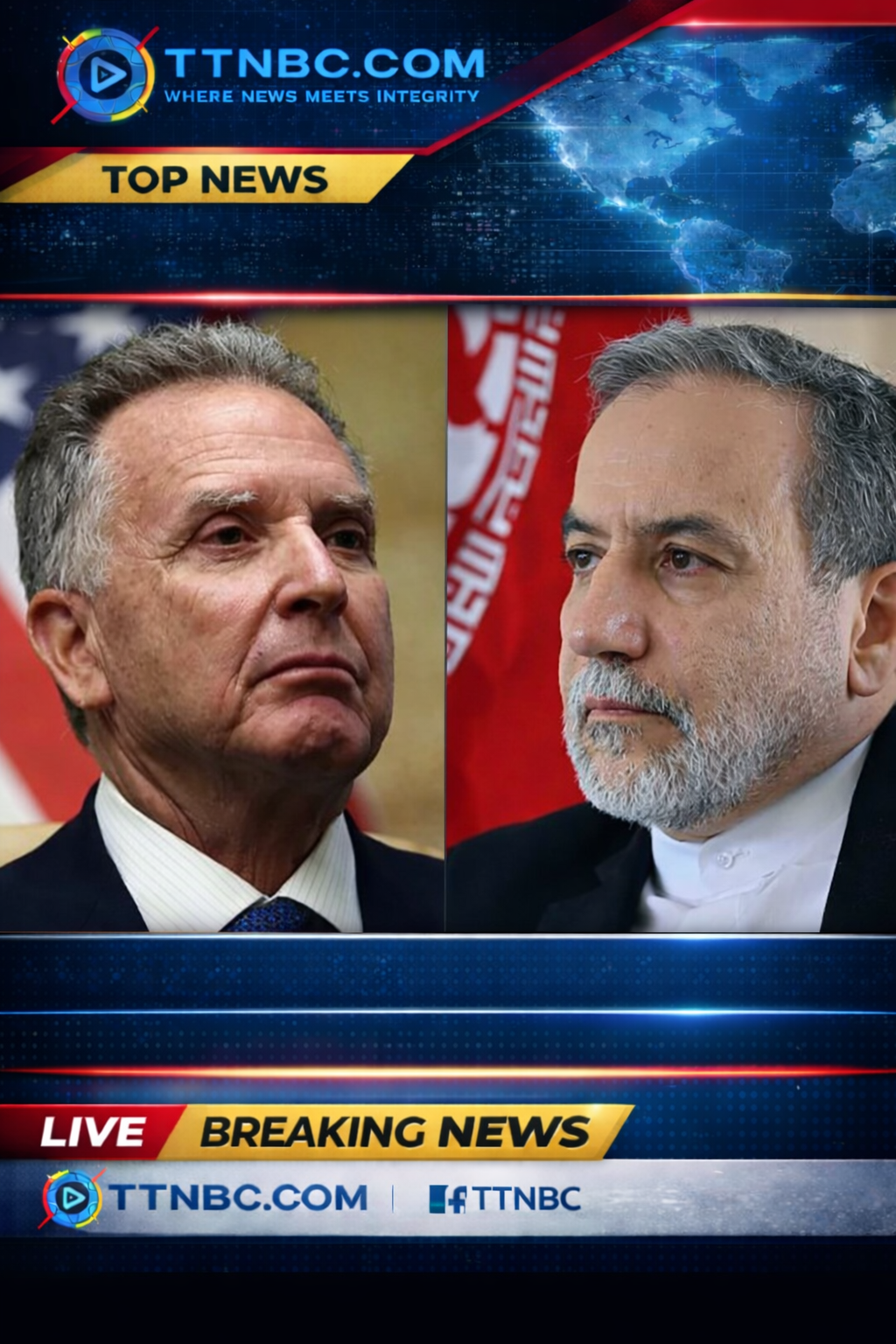
Diplomacy takes center stage as senior US and Iranian officials prepare for high-stakes direct talks in Oman, amid growing fears that escalating tensions could trigger a military confrontation. The US delegation will be led by special envoy Steve Witkoff, while Iran’s team will be headed by Foreign Minister Abbas Araghchi.
The renewed push for Diplomacy follows a significant US military build-up in the Middle East, prompted by Iran’s violent crackdown on nationwide anti-government protests last month. Human rights organizations claim that the unrest resulted in thousands of deaths, intensifying international pressure on Tehran.
Uncertainty surrounding the location and scope of the meeting nearly derailed the Diplomacy effort, but regional mediators intervened to keep the talks alive. These negotiations are seen as a crucial attempt to de-escalate tensions that have reached a dangerous level.
Despite the renewed Diplomacy, Washington and Tehran remain far apart on key issues. Officials hope that progress in Oman could at least lay the groundwork for a broader negotiation framework in the coming months.
From the US perspective, Diplomacy must address more than Iran’s nuclear activities. Washington is demanding that Tehran freeze its nuclear programme, abandon its enriched uranium stockpile, curb its ballistic missile development, end support for regional armed groups, and improve its human rights record.
Iran, however, insists that Diplomacy will be strictly limited to nuclear discussions, leaving major disagreements unresolved. Whether these differences can be bridged remains uncertain as both sides enter the talks with rigid red lines.
Recent threats by President Donald Trump have added urgency to Diplomacy, after he warned of bombing Iran if no deal is reached. The US has deployed thousands of troops, an aircraft carrier, warships, and fighter jets to the region, escalating fears of open conflict.
Iran has responded by vowing forceful retaliation, reinforcing the fragile state of Diplomacy. Tehran has threatened to strike US military assets across the Middle East and Israel if it comes under attack.
The Iranian delegation, led by Abbas Araghchi, has adopted a firm tone on Diplomacy, with the foreign minister recently stating that Iran’s armed forces are “with their fingers on the trigger.” The US side will include Steve Witkoff and Trump’s son-in-law Jared Kushner.
This meeting marks a critical moment for Diplomacy, as it is the first direct engagement between US and Iranian officials since last June’s war between Israel and Iran, during which the US bombed Iran’s three main nuclear facilities. Tehran claims its uranium enrichment halted after the strikes.
For Iran’s embattled leadership, Diplomacy may represent the last opportunity to avert further US military action. Analysts say the regime is in its weakest position since the 1979 Islamic Revolution.
Trump’s threats coincided with a brutal crackdown that further undermined Diplomacy, as security forces suppressed mass protests driven by economic collapse and growing calls for the end of the Islamic Republic.
According to the Human Rights Activists News Agency, the human cost of the unrest has severely damaged Diplomacy, with at least 6,883 deaths confirmed and more than 50,000 arrests reported.
The crisis has once again thrust Iran’s nuclear ambitions into the heart of Diplomacy, reviving a long-running dispute between Tehran and Western powers.
While Iran claims its nuclear programme is peaceful, the US and Israel argue that Diplomacy is necessary to prevent Tehran from developing a nuclear weapon.
Iran insists that Diplomacy must respect its right to enrich uranium on its own soil and has rejected demands to transfer its 400kg stockpile of highly enriched uranium abroad.
Officials have hinted that Diplomacy could involve limited concessions, such as forming a regional uranium enrichment consortium—an idea previously discussed before talks collapsed last year.
However, Iran has firmly rejected attempts to expand Diplomacy to include restrictions on its ballistic missile programme or its regional alliances, which it considers violations of national sovereignty.
President Masoud Pezeshkian has publicly backed Diplomacy, instructing Araghchi to pursue “fair and equitable negotiations” with the US, provided the conditions are appropriate.
Sanctions relief remains a core demand in Diplomacy, as Iran seeks economic breathing room. Critics warn that easing restrictions could strengthen the ruling clerics.
For Washington, successful Diplomacy could provide President Trump with an exit from his military threats, reducing the risk of a wider regional war.
Regional powers fear that a US strike would shatter Diplomacy and plunge Iran into prolonged chaos, warning that air power alone cannot topple the leadership.
Trump reinforced the pressure on Diplomacy by stating that Iran’s Supreme Leader Ayatollah Ali Khamenei “should be very worried,” further heightening tensions.
US Secretary of State Marco Rubio has emphasized that meaningful Diplomacy must go beyond nuclear issues, expressing skepticism while supporting continued engagement.
Originally planned for Istanbul, the Diplomacy initiative is being led by Egypt, Turkey, and Qatar. Iran’s last-minute request moved the talks to Oman and restricted participation to US and Iranian officials only.