
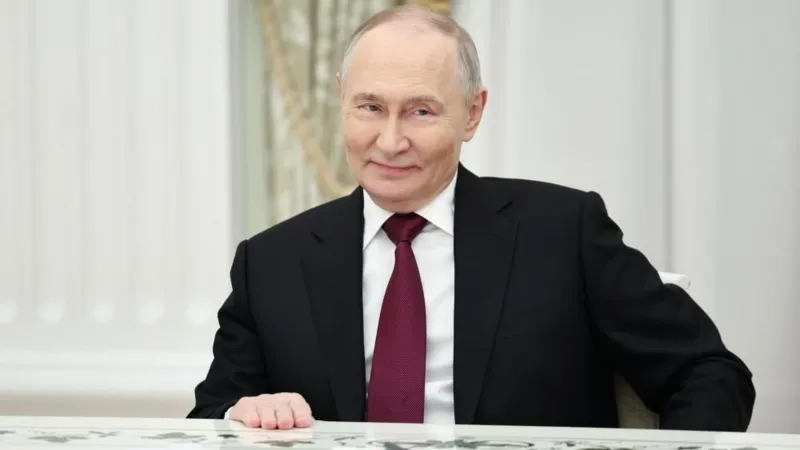
Vladimir Putin said Russia does not seek a war with Europe — but warned Moscow is “ready” if European countries push for conflict, as high-stakes talks continue with U.S. envoys over the Ukraine war.
Five hours of negotiations between Russian President Putin and the senior U.S. negotiator sent by President Donald Trump ended without a breakthrough on a Ukraine peace deal. According to the Kremlin, the discussions were extensive but ultimately failed to narrow the key gaps between Moscow and Washington.
A Kremlin spokesperson described the Moscow meeting as “constructive,” though significant elements of the U.S. proposal remain unacceptable to Russia. Trump’s special envoy Steve Witkoff and presidential adviser Jared Kushner attended the talks after weeks of diplomatic pressure to end the war. The U.S. delegation has not issued any statements since leaving the Kremlin.
Earlier on Tuesday, Putin said amendments proposed by Kyiv and several European governments to the U.S.-backed draft plan were unacceptable. He warned that if Europe “wants to go to war and starts one, we are ready right now,” reinforcing the Kremlin’s longstanding criticism of European involvement.
Ukraine and its allies have urged the U.S. to modify the peace proposal, which the White House has been eager to finalize. The Kremlin previously signaled openness to the framework, though the leaked draft was widely seen as advantageous to Russia before undergoing multiple revisions.
After the Moscow talks, Putin’s aide Yuri Ushakov said the Kremlin agreed with “some points” of the U.S. plan but rejected others. He emphasized that no compromise had yet been achieved and that significant work still lay ahead.
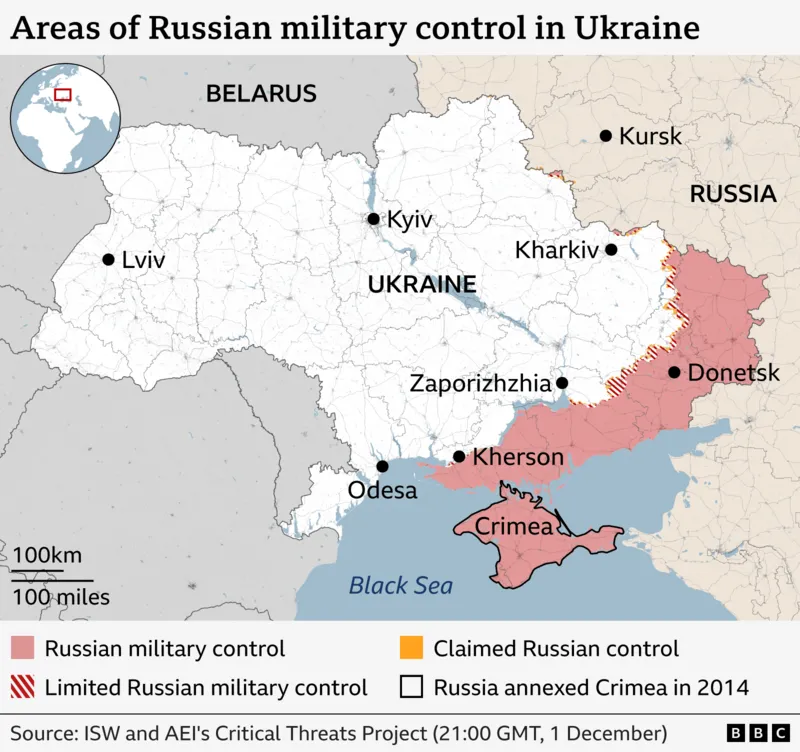
Sharp divisions persist between Moscow and Kyiv over territorial concessions, European security guarantees, and expectations for any final settlement. The Kremlin remains adamant that Kyiv must cede certain regions it still controls, a stance Ukraine rejects.
Speaking before the negotiations, Putin criticized European leaders who support Ukraine’s defense, saying they mistakenly believe they can inflict a strategic defeat on Russia. He insisted that Russia had not planned for war with Europe but reiterated the Kremlin’s readiness if conflict is forced upon it.
Ukrainian President Volodymyr Zelensky said he expected a briefing on the Kremlin talks from the U.S. delegation, though it remains unclear whether Witkoff and Kushner will travel to Kyiv or other European capitals for follow-up consultations. He noted there was an unprecedented opportunity to end the war but stressed that key elements of the proposals still require refinement.
Zelensky repeated that Ukraine must participate directly in peace negotiations and that firm security guarantees—such as NATO membership, long opposed by Putin—are essential. He emphasized that any settlement must prevent Russia from re-invading within a year, a concern central to Kyiv’s demands.
Ukrainian officials recently held two rounds of high-level discussions with U.S. representatives, including Witkoff, Kushner, and Secretary of State Marco Rubio. The White House has said the proposal has been “significantly refined,” though the Kremlin has not confirmed the details of these adjustments.
Despite diplomatic movement, Putin has shown little willingness to alter Russia’s core demands. Zelensky, meanwhile, has repeatedly vowed not to surrender eastern Ukrainian territories still under Kyiv’s control.
While the talks were underway, Trump told his cabinet that resolving the conflict has been difficult and described the situation as “a mess.” In an interview with Fox News, Rubio said the U.S. had made “some progress,” but emphasized that any final decision ultimately lies with Putin, as the Kremlin maintains centralized control over Russia’s wartime policy.
Ukraine’s European partners have drafted an alternative proposal that removes some of the most contentious U.S. provisions, such as recognizing Donetsk and Luhansk as de facto Russian. Zelensky met French President Emmanuel Macron on Monday, joined virtually by other European leaders, though Macron said no final plan yet exists without Ukraine’s and Europe’s full involvement.
Meanwhile, fighting on the front lines continued on Tuesday. Ukrainian forces reported ongoing clashes with Russian troops in Pokrovsk, contradicting Kremlin claims to have fully captured the city. Ukraine’s military accused Russia of premature “flag-planting” intended for propaganda, insisting that Ukrainian units still hold the northern sector and that Russian troops are suffering heavy losses.
Kyiv also rejected Russian claims to have seized Vovchansk and said Ukrainian forces had improved their position in nearby Kupyansk, which Putin’s forces claimed to have taken two weeks earlier. International observers likewise disputed Moscow’s assertions of territorial gains.
Since Russia’s full-scale invasion on 24 February 2022, tens of thousands of soldiers have been killed or wounded, and more than 14,000 civilians have died, according to UN estimates. Civilian sites—including schools, hospitals, and residential buildings—have been repeatedly struck by drone and missile attacks launched by the Kremlin’s forces.
The conflict traces back to 2014, when Ukraine’s pro-Russian government was overthrown and Putin responded by annexing Crimea and backing separatist uprisings in eastern Ukraine, laying the groundwork for the current war.